Tag Archives: Church

Vindication Part 4

This is the fourth installment in a series about 21 years of overcoming conflict and opposition as I’ve tried to learn how to minister and speak the truth in Garland, Texas. You can read the first three chapters in the series at deorl.wordpress.com or in my notes on Facebook.com/deorl.


It has been a financial struggle to keep ministering to the population to whom I’ve been called. Most are young, none are wealthy, many are learning to be faithful when it concerns giving. When we started the church our denomination provided generous financial assistance. After two-and-a-half years that stopped. 

 Image

I had always thought that our dramatic productions could help with money. That is, if we could make them profitable. Up to this point it had not occurred. We typically brought in just enough revenue to pay the bills for the event. After 1998’s huge House of Judgment I was deeply in credit card debt. Although many people had attended, the show cost much more than our ticket revenue.


In the year 2000 we moved the church into a previously abandoned movie theater in Garland, Texas. The building provided us with the necessary space to do our unique Halloween walk-through play, and to try some other things as well. For example, we did an original Christmas play called Emmanuel. Guests who came to the show walked from scene to scene and ended up in the main auditorium where they were privileged to hear music from a young, gifted musician named Chris Megert. You may have heard him sing on the radio. He is now known as Chris August.


In 2001 we performed The Ransom, an original Easter production. This one was performed on multiple stages, but in the same room. Later that year we decided to try something new for Halloween and produced a contemporary dramatic interpretation of Dante’s epic poem The Inferno. These events were well attended, but the numbers were nowhere near what we had experienced in the mid to late 90’s. So, my plan to use the profits from our dramatic productions to pay the bills for the church didn’t work.


When there are financial problems, family members may struggle with each other. Instead of mounting a unified attack against the problems they are facing, the house becomes divided. Jesus said, “a house divided will fall.” That almost happened to us.


During the production of The Inferno in 2001 there were struggles and misunderstandings. It started when I introduced the concept to our production team. They were less than enthusiastic. However, they were willing volunteers and worked hard to bring the vision to reality. I was working with a young man at the time who showed promise as a communicator of the Gospel. I allowed him to present the invitation at the end of The Inferno. He spoke to numerous audiences and there were many who indicated that they prayed to receive Christ. Then this potential preacher began to show signs of resentment, a reaction that was quite different than I would have ever imagined. During my early years of volunteering in ministry I would have been overwhelmed with the privilege of presenting the Gospel so many times with such success. This goes to prove, capability does not necessarily mean a calling from God is present, or, at least, a calling has not been heard and surrendered to.


There were almost always people who wanted to videotape our shows, usually amateurs. This particular year a man with a video production company wanted to use scenes from our show to put together a DVD series to market to youth groups. I scheduled actors and staff to come in for filming on a Tuesday evening. This was a night we wouldn’t be performing for a live audience. I was excited that our show was going to be seen by youth groups all over the country. I thought everything was going well.


After the taping was finished, one of the volunteers told me that I was needed at the front of the building. What I walked into was a secretly called meeting. My most trusted leaders were in attendance. I had been ambushed. The elder in the group was my associate pastor. He accused me of authorizing a transfer of money from our dramatic production to the church. I was guilty as charged, but this shouldn’t have been a problem for anyone. We needed to pay the church bills and we had earned the money from our production to do just that. In fact, as I’ve indicated previously, this was exactly what we wanted these productions to accomplish financially. The transfer was made to sound shady somehow. It was as if I  was being portrayed like a TV evangelist diverting donations from widows to put gold faucets in my Florida mansion. 


I reacted strongly; perhaps returning to the elder speaker the disrespect that this meeting and its silly accusation represented to me. There was nothing to the accusation that was being made. It was a thinly veiled effort to unseat me as president of our non-profit, and probably remove me as pastor of the church as well. I saw it as a hostile takeover attempt. It was certainly not professional or Christ-like. They had nothing to say when I presented the facts. There was no more discussion or debate. When I concluded my speech to the group, three key individuals bolted from the room and sped out of the parking lot with screeching tires. One of them was the young man I spoke of earlier to whom I had given the responsibility of presenting the Gospel to our audiences. He and the elder who initiated the accusation never returned to our church. The last man and his wife stayed for awhile, but several years later his family left.  I’ve heard about deacons doing this sort of thing in Baptist churches, or a board of directors doing it to the president of a company (ie. Steve Jobs and Apple), but these people were like family to me.


I sought to reconcile. I even invited the elder man to return to present the Gospel at other productions we did, and he acquiesced. Things were never the same after this, though. We had to leave our building in 2002 because there was no heat and  because we couldn’t afford the rent any longer. We continued to do shows through the mid-2000’s but have not done anything dramatic since 2008. Perhaps it’s time to begin again. I have to remind myself of God’s promise of vindication, and I need to hear his call once more to proclaim the Gospel via the theatre.

Vindication Part 2

This is the second installment in a series about 21 years of overcoming conflict and opposition as I’ve tried to learn how to minister and speak the truth in Garland, Texas. You can read the intro to the series in my notes on Facebook.

I began ministry in Garland in November of 1992. I had just finished the fourth and most well attended year of a Halloween production I started in The Colony, Texas. It was called House of Judgement. I had no idea at the time how big this Christian dramatic alternative to the traditional haunted house would become.

In my last year in The Colony 2,000 people came through the house. In its first year in Garland, we exceeded that number when 2,250 came through. There was great support from the new church. A wonderful lady, who has since gone to be with the Lord, donated magazine quality flyers to publicize the event. Even still, during one of the performances one of the older volunteers seemed amazed at the number of people who were coming through the House. He confided that he had believed no more than a few people would be interested.

In 1994 people waited in line for hours to witness our Halloween drama and 4,650 came through. We had certainly outgrown the church facilities. Some church members complained: “How big are you going to let this thing get?” Every year many people prayed to receive Christ as the result of what they had witnessed. By this time hundreds of people had responded to our dramatic presentation. So, were we supposed to limit the number of people who heard the Gospel?

The following year was 1995 and the church graciously allowed us to use a recreation center it owned. Over 7,000 people came through the House. More than 10,000 attended when we held it at the same facility the next year. Our final year in this venue was 1997. We had the longest lines in our history, performed into the wee hours of the morning, and well over 11,000 people came through. I don’t believe we could have accommodated more.

Each year I wrote a different script for the production. If you are unfamiliar with House of Judgment, it is a morality play performed on multiple stages. An audience, typically of between 40-50 members, enters the House every 20 minutes or so, and watches the play by moving through a maze from stage to stage. House of Judgement stories were about the lives of teenagers who faced the earthly and eternal consequences of their choices. The story changed every year, but one thing remained the same: teenagers made choices that resulted in their deaths; those who believed in Jesus Christ went to heaven; those who rejected Jesus went to hell. We had some amazing, dramatic representations of heaven and hell!

We had stories about teenagers in gangs, boy-girl relationships gone bad, racism, drugs, suicide, and other issues faced by young people. Sadly, some in our church felt that these stories, and the language used by the actors was offensive. They wanted to edit the scripts. In 1997 I submitted my script to the pastor, who had others look at it. I received it back with portions circled in red, which reminded me of getting a paper back from the teacher at school. One of the memorable offenses I was supposed to remove was the following. A young person is at a party talking about another kid, whom he doesn’t like much. He explains why the other teen is late in coming to the party: “Yeah, he’s a trainer. Always stays late after games and kisses coach’s butt.” I was supposed to edit the phrase “kisses coach’s butt” because of how offensive it was. Thankfully the pastor saw how silly this was and the phrase stayed in the script. This is just an example of a problem that had been brewing for years. We were experiencing resistance and the erosion of support for a ministry that was reaching more and more people with a real and relevant Gospel.

The recreation center had its own board of directors, and they were not always happy with shutting the facility down for this production. Additionally, we probably didn’t return the facility to the condition they expected. I take responsibility for this. My only excuse is the extreme weariness of our key volunteers by the end of a production. We had plenty of people who wanted to be in the show, but few volunteers who wanted to clean up after. A little understanding would have been nice, though.

In 1997 we paid the recreation center for the use of the facility (even though it was owned by the church for which I worked). That year many, many people prayed to receive Christ because of our event. I remember going to the board meeting one night after the event concluded. I was very tired but excited to report the phenomenal number of people who attended and, more importantly, the large number who had responded to the Gospel in the counseling room. There was no enthusiasm from the board. None. I handed them a check for the rent and the treasurer took it without comment or commendation. They opposed us doing House of Judgement there again.

That was the last year House of Judgment was done under the sole authority of the church where I served. A wise woman at the church, who had founded a crisis pregnancy center, recommended that we become a non-profit organization. HOJ, Inc. was born.

In 1998 we encountered more opposition and difficulty than any previous year. We were essentially on our own. We had no building. We had no money. We did have many young people who were interested in acting, and plenty of volunteers ready to work. I had written a brand new script based, in part, on actual events and real people. It promised to be a powerful show. We began rehearsals in August of that year, even before we had a building. The recreation center was kind enough to permit us to use their facility for auditions and rehearsals. This was also the facility where I did youth ministry each week. By mid-September we still had no building in which to perform. The church that I served was too small and would not allow us to perform in their building in any case. We were also still not permitted to do it at the recreation center, even in an emergency. What to do? Where to go?

I searched and searched for a building large enough to accommodate the show, and which we could afford. Finally, we discovered an old shopping center in Richardson, Texas with an owner who was willing to rent it to us for a month. It would cost us far more than we would have had to pay the recreation center of my church, and it had been abandoned for a decade or more. However, I believed we could use it. There were no walls, so we could build our maze and scenes however we wanted. This was going to cost a fortune compared to previous House of Judgement productions. Where would the money come from? Not from my church, which had all but abandoned the project. I decided to open multiple credit card accounts and pay for it that way.

The biggest problem immediately facing us was time. We couldn’t get into the building until October 1st, but the show was scheduled to begin on the 12th. We were going to allow parents of our actors to come through that day as a kind of live dress rehearsal. So, we had 12 days, and three or four credit cards for capital. From this we would create the largest production we’d ever done. Thanks in large part to the leadership and hard work of two professionals who were in the construction industry we met the deadline… sort of.

Ceilings in the old grocery store were over 20 feet. Most of our scenes required a ceiling of less than half that height. Problem was, the fire marshall informed us that we couldn’t create a lower ceiling unless we also lowered the emergency fire sprinklers. This was cost and time prohibitive. As the result, all of our sets were left open at the top. This would present a significant noise challenge. Audiences in one scene would hear things going on in other scenes around them: dialog, music, screaming, gunshots. It was going to be a nightmare. I just hoped people who came through would be able to hear the dialog and get the message. Honestly, I was so discouraged that I never went through and watched the show that year. I was kept rather busy trying to get audiences through, anyhow.

When the first audience of parents and volunteers came through to test us out on October 12th, the final scene was still under construction! In House of Judgement the last scene is always hell. Our hell in 1998 was simple: it consisted of crosses that the condemned would be chained to, symbolic of their rejection of Jesus’ death on the cross. They would have to pay the penalty of their sins by suffering eternal death on crosses of their own. The first several audiences that entered could probably hear a chain saw cutting the telephone poles, which were being used to construct those crosses for the final scene. Construction finished before the first audience got to the scene, but it was certainly not what I’d planned, and I’m sure it wasn’t a terribly scary hell scene… yet.

The House was finished by the following weekend and we opened to the public. We began to see a response we’d never seen before. An average of one in every four people who came through House of Judgement 1998 indicated on a card that they prayed to receive Christ. In spite of all the difficulty and imperfection of the production that year, 13,500 people experience it.  We had 1,800 come through in a single Saturday night!

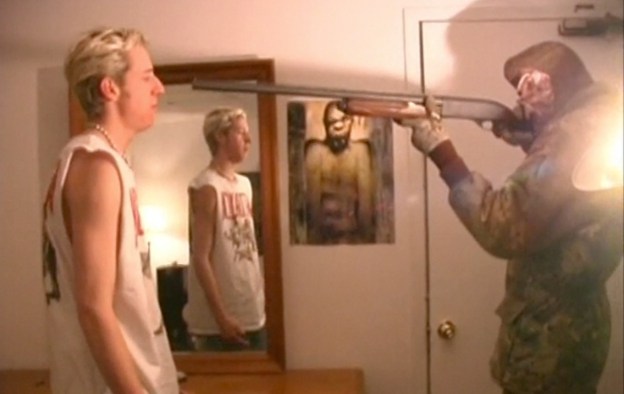
That year a videographer approached me about taping the show and turning it into a movie. The movie is called Dark Persuasion and can be viewed online at www.youtube.com/deorl

Vindication Promise 1

This is the first installment of a muliti-part story about 21 years of overcoming conflict and opposition as I’ve tried to learn how to minister and speak the truth in Garland, Texas.


Twenty-one years ago at around this time of year I was seeking God about the call to a new church. I’d been the youth minister for one congregation while I attended seminary. Now the time had come for me to graduate and move on. I made my resume’ available through the seminary placement office and several churches showed interest. My plan was to move back toward Arizona or California, but a church just 45 minutes away in Garland, Texas pursued and interviewed me. I spoke there in view of a call. They voted to call me as their Associate Pastor and Youth Minister. 


Now, I had said to myself, maybe to God, that I wouldn’t serve there unless the vote was one-hundred percent in favor. I’d already experienced drama related to a church that was not entirely behind their pastor and I didn’t want to be part of a divided church situation, especially over me. Trouble is, many churches with congregational forms of government do not agree one-hundred percent– on anything. When the pastor called with the news that they wanted me to serve, I asked about the vote. He said there were three or four people opposed. I declined the offer. The pastor wisely asked me to think about it and let him know by the following Wednesday evening.


Wednesday came and I sat in my office at the old church. I was planning my message for our weekly youth event called Fusion. I prayed about the new church and whether it was God’s will for me to go. I asked the Lord to speak, and I read my Bible to seek an answer. I don’t know how I arrived at the passage, but the words from Isaiah 41:8-20 jumped off the page. Here’s the text to verses 11-13 in the midst of the passage.

“All who rage against you 

will surely be ashamed and disgraced; 

those who oppose you 

will be as nothing and perish. 

Though you search for your enemies, 

you will not find them. 

Those who wage war against you 

will be as nothing at all. 

For I am the Lord, your God, 

who takes hold of your right hand 

and says to you, Do not fear; 

I will help you.”


What this said to me at the time was: it doesn’t matter what a few nay-sayers vote; you will be vindicated. God had my back, and he wanted me to serve at the new church. If you look at the passage, it speaks about people “who rage against you… your enemies… those who wage war against you.” That would be too strong if it referred only to a few people who voted not to call a future associate pastor and youth minister. As it turns out, this passage has been an essential promise to me during a generation of service in this community.


Time and again I’ve encountered opposition. At first this came from older people who didn’t understand my relational style of reaching teenagers, or why we wanted to do a Sunday night meeting for youth at a recreation center instead of attending church with the adults in the sanctuary. One Sunday evening before our youth moved to the rec center an older gentleman approached me and pointed out that one of the teenage young men was wearing a hat in the sanctuary. I turned to see who the offending youth might be and witnessed the boy’s mother directing him to remove the offending headgear. He complied (probably grudgingly). I courteously responded that it appeared the situation had been taken care of. The man never spoke to me again. This is a minor example of a growing rift between the old and the young. It happens in many churches: traditional expectations versus innovative methodology. I cannot say that everything I did was wise, nor can I say that I did enough to communicate with the older generation in that church. I do believe that everything we did fulfilled the church’s mission of reaching the unreached.


Understand, this was opposition to my method of ministry, not warfare. A critic is not the enemy. In fact, there can be healthy criticism if it is intended to edify and encourage. We can agree to disagree on some points. The real warfare is spiritual in nature, and the real Enemy is called Satan. His name comes from a Hebrew word that means adversary or enemy. This Enemy was preparing deeper harm to me and to my ministry than I ever imagined.  

 Image

By the way, let me pause to affirm that this is not unique to me. Anyone who makes the effort to pursue God’s call and do His will is going to be opposed by the same Enemy. This is the one about whom Jesus said, “The thief comes only to steal and kill and destroy” (John 10:10a).